

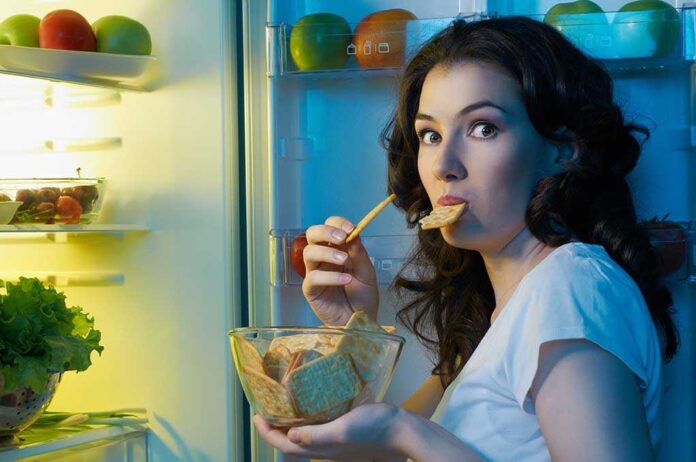
The secret to conquering late-night cravings isn’t willpower at midnight—it’s what you do at 8 AM.
Story Overview
- Registered dietitians identify five daytime habits that prevent nighttime food cravings
- Eating adequate balanced meals throughout the day stops compensatory hunger responses
- Food restriction during the day actually intensifies evening cravings for high-calorie foods
- Sleep deprivation confuses hunger and fatigue signals, leading to unnecessary eating
- Mindful eating and eliminating “forbidden foods” reduces psychological food obsession
The Compensation Trap Most People Fall Into
Your body keeps a precise energy ledger, and skipping meals during the day creates a debt that demands payment with interest at night. Research demonstrates that inadequate daytime caloric intake triggers energy homeostasis mechanisms, producing intense evening cravings specifically for calorie-dense foods. The body interprets meal skipping as food scarcity, activating ancient survival mechanisms that prioritize energy storage over willpower.
This compensation cycle explains why traditional “eat less” advice backfires spectacularly. When people restrict breakfast or lunch, their metabolism doesn’t simply adjust downward—it stages a rebellion at dinnertime, demanding exactly the high-calorie foods dieters desperately want to avoid.
Why Protein and Fiber Create Natural Appetite Control
Strategic nutrient selection transforms hunger from an urgent biological demand into a manageable signal. Protein sources like beans, nuts, eggs, and fish trigger greater satiety hormone release compared to refined carbohydrates, while dietary fiber from whole grains and vegetables physically expands in the digestive system, mechanically signaling fullness to the brain.
Meals combining both nutrients—oatmeal with nuts and fruit, whole-grain sandwiches with nut butter, or salmon with vegetables and wild rice—extend satisfaction for hours beyond eating. This isn’t psychological; it’s biochemical architecture working in your favor rather than against it.
The Hydration Confusion That Triggers False Hunger
Your brain processes thirst and hunger signals in remarkably similar ways, creating a biological mix-up that sends countless people searching through kitchen cabinets when they should be reaching for water glasses. Registered dietitians recommend eight glasses daily, plus 8-16 ounces specifically when nighttime hunger strikes, to eliminate this signal confusion.
Herbal teas provide additional psychological satisfaction by extending consumption time and creating relaxation rituals. Peppermint and chamomile varieties offer the comfort-seeking aspects of late-night eating without calories, addressing both physiological hydration needs and emotional eating triggers simultaneously.
Sleep Deprivation Creates Metabolic Chaos
Sleep shortage doesn’t just make you tired—it actively sabotages glucose metabolism and disrupts the hormones controlling hunger and appetite regulation. Adults require seven to nine hours nightly for optimal metabolic function, and shortchanging this requirement creates a cascade of appetite dysfunction that masquerades as willpower failure.
When sleep-deprived individuals interpret fatigue as hunger, they consume unnecessary calories in a futile attempt to restore energy that only actual rest can provide. Recognizing post-dinner snacking urges as potential sleep signals rather than hunger cues represents a fundamental shift in addressing nighttime eating behaviors.
The Restriction Paradox That Intensifies Cravings
Food restriction operates on the same psychological principle as prohibition—the forbidden becomes irresistible. Research on chocolate lovers showed that two-week restriction periods resulted in increased cravings, anxiety, and guilt upon resumption. Similarly, three-day bread deprivation studies demonstrated that restriction intensifies desire for specific foods rather than diminishing it.
Mindful eating practices combined with food permission eliminate the scarcity mindset that drives obsessive thinking about “forbidden” foods. When all foods become available choices rather than banned substances, the psychological urgency around eating dissipates, allowing natural satiety cues to guide consumption patterns.
Sources:
Hungry at Night? Tips to Curb Late Night Cravings
How to Curb Late Night Cravings: 7 Science-Backed Hacks
5 Tips to Curb Your Late Night Snacking
7 Easy Ways to Curb Your Nighttime Snack Cravings